Sunday, March 22, 2009


Tuesday, March 17, 2009


Wednesday, March 11, 2009
Marriage Without Duty is Loveless
I often read Dan Savage’s sex advice column in the Chicago Reader. He is an homosexual, while most of his correspondents are heterosexual, and so his answers to them are sometimes quite hilariously wrong. This week, however, he was tragically wrong.
“Sexless and Desperate” wrote in saying that she had been married for about four years and had one child with her husband. S+D’s problem was that, while she had a perfectly normal desire for frequent coition, her husband almost never wished to have marital relations. She added that he would rather masturbate to pornography, which he does about three times a week.
Mr. Savage responded that, while he would normally simply advise the woman to end the relationship and find a more eager partner, since the couple has a child he thinks it would be better that they stay together. He then advised S+D to seek and open relationship with her husband. “So long as you’re a good and loving partner and co-parent, and so long as your family is your first priority, you should be free to seek safe, sane, and non-disruptive sex elsewhere.”
Of course, from an atheist/secular/queer perspective, this must seem like perfectly serviceable advice, but the real answer is staring us right in the face. The wife should simply insist that her husband stop masturbating.
• First off, masturbating counts as cheating. Despite what our secular society says, masturbating is a fundamental violation of chastity and a betrayal of the marital bond. S+D’s husband has no more of a “right” to masturbate than he has to keep a mistress or patronize prostitutes.
• Secondly, any fool should be able to figure out that the husband is simply dissipating his sexual energies on self-abuse and, if he were to cut that out, he would soon enough seek satisfaction from his wife.
• Thirdly, pornography has obviously given the fellow a distorted idea of what sex ought to be like. Real, human, intimacy is difficult, messy, and demanding. Moods, emotions, and the desires of another person come into play. It requires effort. One of the evils of pornography is that it turns sex into a consumer item, an easily available self-indulgence. Pornography is absolute poison to human intimacy.
• Finally — no mention of duty? S+D has a right to sexual intimacy with her husband. The fault here is entirely his and he should be made aware of it.
Am I the only one who finds it hugely ironic that secular humanists call Catholic expectations of chastity “unrealistic” when they fail to see how totally unworkable their own sexual mores are?

“Sexless and Desperate” wrote in saying that she had been married for about four years and had one child with her husband. S+D’s problem was that, while she had a perfectly normal desire for frequent coition, her husband almost never wished to have marital relations. She added that he would rather masturbate to pornography, which he does about three times a week.
Mr. Savage responded that, while he would normally simply advise the woman to end the relationship and find a more eager partner, since the couple has a child he thinks it would be better that they stay together. He then advised S+D to seek and open relationship with her husband. “So long as you’re a good and loving partner and co-parent, and so long as your family is your first priority, you should be free to seek safe, sane, and non-disruptive sex elsewhere.”
Of course, from an atheist/secular/queer perspective, this must seem like perfectly serviceable advice, but the real answer is staring us right in the face. The wife should simply insist that her husband stop masturbating.
• First off, masturbating counts as cheating. Despite what our secular society says, masturbating is a fundamental violation of chastity and a betrayal of the marital bond. S+D’s husband has no more of a “right” to masturbate than he has to keep a mistress or patronize prostitutes.
• Secondly, any fool should be able to figure out that the husband is simply dissipating his sexual energies on self-abuse and, if he were to cut that out, he would soon enough seek satisfaction from his wife.
• Thirdly, pornography has obviously given the fellow a distorted idea of what sex ought to be like. Real, human, intimacy is difficult, messy, and demanding. Moods, emotions, and the desires of another person come into play. It requires effort. One of the evils of pornography is that it turns sex into a consumer item, an easily available self-indulgence. Pornography is absolute poison to human intimacy.
• Finally — no mention of duty? S+D has a right to sexual intimacy with her husband. The fault here is entirely his and he should be made aware of it.
Am I the only one who finds it hugely ironic that secular humanists call Catholic expectations of chastity “unrealistic” when they fail to see how totally unworkable their own sexual mores are?
Wednesday, March 4, 2009
An Unacceptable Truth?
I am baffled.
I understand why fundamentalists reject Darwin: their literalist Bible fetish is all they have and Darwin stands foursquare against the version of creation (actually two different versions) in the Book of Genesis. As a Catholic, and not chained to biblical literalism, so evolution isn’t a theological issue to me, but at least I understand why it is to fundamentalists.
But Global Warming — why do an over-whelming number of Traditionalist Catholics reject the possibility of greenhouse gasses causing climate change?
I can see no theology behind this, nor have I ever heard any such reasons cited. The facts would seem to be pretty straightforward:
I understand why fundamentalists reject Darwin: their literalist Bible fetish is all they have and Darwin stands foursquare against the version of creation (actually two different versions) in the Book of Genesis. As a Catholic, and not chained to biblical literalism, so evolution isn’t a theological issue to me, but at least I understand why it is to fundamentalists.
But Global Warming — why do an over-whelming number of Traditionalist Catholics reject the possibility of greenhouse gasses causing climate change?
I can see no theology behind this, nor have I ever heard any such reasons cited. The facts would seem to be pretty straightforward:
• An overwhelming preponderance of scientists believe that carbon emissions from industrial activity are causing potentially catastrophic climate change.
• The only scientists who don’t are bought-and-paid-for by energy companies.
Facts are facts and why the facts themselves should be subject to a Liberal/Conservative divide is beyond me. Liberals and Conservatives both agree that teen-age pregnancy, STD’s, poverty, terrorism, war, and economic collapse are all problems, even if they disagree profoundly over what to do about them. Why Conservatives should discount the very existence of this problem is beyond me.

Could it be — wishful thinking?
Most Traditional Catholics live a suburban life-style that is highly dependent upon automobile transport and high-energy consumption. Such a life-style would be morally unjustifiable were they to accept the scientific consensus on global warming. It would be, as Al Gore has said (to much derision) —An Inconvenient Truth. One that requires radical changes in the kind of life they lead.
Is it uncharitable of me to think this? Perhaps, but just the other day I was talking to a friend from church. He’s pious, a conscientious grandfather, good sense of humor, intelligent, a fine fellow all around. But he said to me, in all seriousness, that he felt it was pointless to conserve oil because he thought oil was a natural product, continuously being produced beneath the earth’s surface. Wow — is that wishful thinking or what?!?!
I would really like to see comments on this, because it just baffles me.

Could it be — wishful thinking?
Most Traditional Catholics live a suburban life-style that is highly dependent upon automobile transport and high-energy consumption. Such a life-style would be morally unjustifiable were they to accept the scientific consensus on global warming. It would be, as Al Gore has said (to much derision) —An Inconvenient Truth. One that requires radical changes in the kind of life they lead.
Is it uncharitable of me to think this? Perhaps, but just the other day I was talking to a friend from church. He’s pious, a conscientious grandfather, good sense of humor, intelligent, a fine fellow all around. But he said to me, in all seriousness, that he felt it was pointless to conserve oil because he thought oil was a natural product, continuously being produced beneath the earth’s surface. Wow — is that wishful thinking or what?!?!
I would really like to see comments on this, because it just baffles me.
Tuesday, March 3, 2009
An Insight Worthy of Spengler
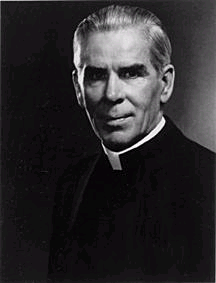
If we could take Christ off the cross and put him over to one side, and then put the cross without Christ on the other side, we would have the picture of the world. Who picks up Christ without the cross? Our Western, affluent, Christian civilization. No discipline, nor mortification, no cross, no self-denial. Who picks up the cross without Christ? Russia, China. The ascetic principle of Christianity has moved to the totalitarian states: discipline, order, law, commitment to a common end. But neither side has the answer. The cross-less Christ is weak, effeminate, and can never save us, because there is no mention of sin. The Christ-less cross allows Dachau, Auschwitz, the squeezing of the lives of individuals like so many grapes to make the totalitarian wine of the state. The world problem and our own person problem is this: Will Christ find the cross before the cross finds Christ?-Servant of God Archbishop Fulton J. Sheen
Small Mortifications
Back when I was a godless communist, we all drank our coffee black because “lathering” your coffee (i.e. putting in cream and/or sugar) was bourgeois consumerism. The communist analysis of this has actually proven correct, as the rise of Starbucks illustrates. Our urban bourgeois (the so called “Yuppies”) have become ever more extravagant consumers of coffee, having long since abandoned simple “lathered Java” for espressos, cappuchinos, and “coffee drinks” that are confected with steamed milk and gooey syrups, topped with cascades of whipped cream and garnished with slivers of chocolate. Why, I feel positively echt proletarisch every time I drink black Joe straight from the pot.
Imagine then, how pleased I was to read the other day that Opus Dei numeraries drink their coffee black as a mortification. I had never really thought of this lingering trace of communist discipline in my life as a mortification, but that’s exactly what it had been right from the start, and it got me to thinking about the place of small mortifications in my life.

Of course, anyone with kids can name a dozen small mortifications they endure each day for their kids. Wife-mate used to like to soak in the tub for hours with a good mystery novel; it’s been years since she’s been able to do that. Frequently I would scarf down a whole pint of Haggen-Datz at one sitting, but now, not only can’t we afford the good stuff, but I pretty much just let the kids have ice cream for dessert while I content myself with another apple. If something for dinner is good, then my kids eat it right up; but if it is bad, then I’m the one that will have to finish the leftovers. Who gets to use the bathroom last? Who has to clean up the vomit? Who gives up his sweater when the afternoon turns cold and someone has forgotten hers? Do I even need to answer these questions?
The mortifications involved with having kids are perfectly natural, and that’s part of what makes them good for you. But they’re also things we do without thinking, they cease to be mortifications because we do them automatically. Similarly, many good habits cease to be mortifications: by now I don’t know if I would even want to put cream and sugar in my coffee.
Contrariwise, mortifications lose their value when they are done for show. Saint Benedict had it right when he corrected a monk who always took the worst piece of fruit in the bowl, for that was false modesty; he should take the first piece his hand fell upon, neither picking the best nor the worst.
I think that in our lives we need to look for mortifications, may of which are right there if you would only see them. The stairs we could take instead of the elevator, the trips that could be made by walking or bicycling instead of driving, the time that could be better spent in prayer than in listening to the radio — there are probably a thousand little things that we could take up as little crosses throughout the day.
This lent, I want to find them.
What mortifications do you find in everyday life?
Imagine then, how pleased I was to read the other day that Opus Dei numeraries drink their coffee black as a mortification. I had never really thought of this lingering trace of communist discipline in my life as a mortification, but that’s exactly what it had been right from the start, and it got me to thinking about the place of small mortifications in my life.

Of course, anyone with kids can name a dozen small mortifications they endure each day for their kids. Wife-mate used to like to soak in the tub for hours with a good mystery novel; it’s been years since she’s been able to do that. Frequently I would scarf down a whole pint of Haggen-Datz at one sitting, but now, not only can’t we afford the good stuff, but I pretty much just let the kids have ice cream for dessert while I content myself with another apple. If something for dinner is good, then my kids eat it right up; but if it is bad, then I’m the one that will have to finish the leftovers. Who gets to use the bathroom last? Who has to clean up the vomit? Who gives up his sweater when the afternoon turns cold and someone has forgotten hers? Do I even need to answer these questions?
The mortifications involved with having kids are perfectly natural, and that’s part of what makes them good for you. But they’re also things we do without thinking, they cease to be mortifications because we do them automatically. Similarly, many good habits cease to be mortifications: by now I don’t know if I would even want to put cream and sugar in my coffee.
Contrariwise, mortifications lose their value when they are done for show. Saint Benedict had it right when he corrected a monk who always took the worst piece of fruit in the bowl, for that was false modesty; he should take the first piece his hand fell upon, neither picking the best nor the worst.
I think that in our lives we need to look for mortifications, may of which are right there if you would only see them. The stairs we could take instead of the elevator, the trips that could be made by walking or bicycling instead of driving, the time that could be better spent in prayer than in listening to the radio — there are probably a thousand little things that we could take up as little crosses throughout the day.
This lent, I want to find them.
What mortifications do you find in everyday life?
Monday, February 23, 2009
Assume That Your Kids Know Nothing
My parents just expected me to know things.
Like my father, who was always spouting off something like: “That Mac Churchill is a regular Sammy Glick!”
“Who?” I would ask.
“Mac Churchill!” he would rail, naming a business associate that I had met many times.
“No, who’s Sammy Glick?”
“You know!” he would say, as if to an idiot, “Sammy Glick!”
 Years later, I found out that Sammy Glick was the ambitious, grasping, unscrupulous protagonist of the 1941 novel “What Makes Sammy Run?” Why my father should have expected me to know anything about a novel published nineteen years before I was born, I’ll never know. And why he would have expected a ten-year-old to know the metaphorical significance of Craig’s Wife, Shylock, or Nevil Chamberlain without explanation, I’ll never know either. Similarly, at one time or another, he berated me for not knowing where Lithuania, Abyssinia, or Siam were on a map, when none of those names had appeared in an atlas since the 1930’s. (Lithuania has since re-appeared among the nations of the world, while Abyssinia and Siam are now known as Ethiopia and Thailand respectively.)
He could really make me feel stupid.
When I was about eight or ten, however, an incident made me realize that perhaps this was not my fault. We were staying at my Grandma’ Ruby’s house, and I was watching Victor Mature in “Samson and Delilah,” when my mom told me it was time for bed. I protested, “This is a cool movie! I want know how it ends.”
“It just the story from the Bible,” Ruby said, “You know how it ends.”
“No, I don’t.”
Ruby then insisted that I be allowed to watch the rest of the movie. Later, after I had been sent upstairs to bed, I could over-hear her telling my mother in no uncertain terms that I should be taught something about the Bible. “Even if you are agnostic, your children ought to know something about Christianity. Our culture is basically Christian, and he ought to be able to understand it!”
(I never was taught anything about Christianity by my parents, however, and was often caught short when anyone else talked about it. I didn’t, for instance, know the basic Gospel story of Jesus until I saw Jesus Christ Superstar in junior high school. I grew up assuming that everyone accepted Darwin, and was shocked to find out that some people believed in a literal seven days of creation. After that, I assumed that all Christians were Biblical literalists, and was just as embarrassed later when I was told otherwise in the most sneering of terms by a very offended woman Episcopal priest. And the Biblical references in Shakespeare and poetry — take 10% off my English Literature grades for that!)
When I had kids I resolved never to assume that they already knew something, or would just pick it up as they went along.
Perhaps I was pedantic about it, perhaps I was lecturing, but they were never stung by their ignorance as I had been so many times. I trained them to speak-up when they didn’t know something, to look it up themselves if they couldn’t ask, and never to be ashamed when they didn’t know something. I would interrupt myself to explain a word ("… he had a certain adiposity. Adiposity: do you know what that means?"), quizzed them to make sure they knew what I was talking about ("Croats are Catholic and Serbs are Orthodox — what do we mean by 'Orthodox'?"), asked them what words in movies and lectures meant ("What does she mean by 'Evangelical'?") They joke about it (“Dad’s in lecture mode now!”) but they don’t hesitate to pester me with questions night and day (“Dad — what does ‘rueful’ mean?”).
Recently, I came to realized that I might have succeeded at this. My favorite professor from college came to Chicago for a lecture recently and I took the opportunity to see her for the first time in twenty-five years by having her over for dinner. The whole family was at the table, and she was talking about her husband (“… that was just after he had gotten his terminal degree …”), when I interrupted her.
“Pardon me,” I said holding up a finger to motion for her to hold that thought. Then, turning to my kids, I asked, “Do you know what a terminal degree is?” When they all shook their heads, I explained, “It’s the highest degree that one can get in one’s field. Usually, it’s a Ph.D.” Then I turned back to my professor, “Sorry to interrupt, but I didn’t think they knew that.”
“Oh, I don’t mind at all!” she smiled at me brightly, “Now I know why you have such bright kids!”
Like my father, who was always spouting off something like: “That Mac Churchill is a regular Sammy Glick!”
“Who?” I would ask.
“Mac Churchill!” he would rail, naming a business associate that I had met many times.
“No, who’s Sammy Glick?”
“You know!” he would say, as if to an idiot, “Sammy Glick!”
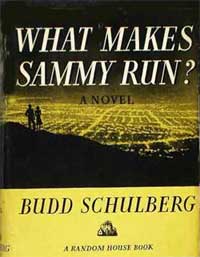 Years later, I found out that Sammy Glick was the ambitious, grasping, unscrupulous protagonist of the 1941 novel “What Makes Sammy Run?” Why my father should have expected me to know anything about a novel published nineteen years before I was born, I’ll never know. And why he would have expected a ten-year-old to know the metaphorical significance of Craig’s Wife, Shylock, or Nevil Chamberlain without explanation, I’ll never know either. Similarly, at one time or another, he berated me for not knowing where Lithuania, Abyssinia, or Siam were on a map, when none of those names had appeared in an atlas since the 1930’s. (Lithuania has since re-appeared among the nations of the world, while Abyssinia and Siam are now known as Ethiopia and Thailand respectively.)
He could really make me feel stupid.
When I was about eight or ten, however, an incident made me realize that perhaps this was not my fault. We were staying at my Grandma’ Ruby’s house, and I was watching Victor Mature in “Samson and Delilah,” when my mom told me it was time for bed. I protested, “This is a cool movie! I want know how it ends.”
“It just the story from the Bible,” Ruby said, “You know how it ends.”
“No, I don’t.”
Ruby then insisted that I be allowed to watch the rest of the movie. Later, after I had been sent upstairs to bed, I could over-hear her telling my mother in no uncertain terms that I should be taught something about the Bible. “Even if you are agnostic, your children ought to know something about Christianity. Our culture is basically Christian, and he ought to be able to understand it!”
(I never was taught anything about Christianity by my parents, however, and was often caught short when anyone else talked about it. I didn’t, for instance, know the basic Gospel story of Jesus until I saw Jesus Christ Superstar in junior high school. I grew up assuming that everyone accepted Darwin, and was shocked to find out that some people believed in a literal seven days of creation. After that, I assumed that all Christians were Biblical literalists, and was just as embarrassed later when I was told otherwise in the most sneering of terms by a very offended woman Episcopal priest. And the Biblical references in Shakespeare and poetry — take 10% off my English Literature grades for that!)
When I had kids I resolved never to assume that they already knew something, or would just pick it up as they went along.
Perhaps I was pedantic about it, perhaps I was lecturing, but they were never stung by their ignorance as I had been so many times. I trained them to speak-up when they didn’t know something, to look it up themselves if they couldn’t ask, and never to be ashamed when they didn’t know something. I would interrupt myself to explain a word ("… he had a certain adiposity. Adiposity: do you know what that means?"), quizzed them to make sure they knew what I was talking about ("Croats are Catholic and Serbs are Orthodox — what do we mean by 'Orthodox'?"), asked them what words in movies and lectures meant ("What does she mean by 'Evangelical'?") They joke about it (“Dad’s in lecture mode now!”) but they don’t hesitate to pester me with questions night and day (“Dad — what does ‘rueful’ mean?”).
Recently, I came to realized that I might have succeeded at this. My favorite professor from college came to Chicago for a lecture recently and I took the opportunity to see her for the first time in twenty-five years by having her over for dinner. The whole family was at the table, and she was talking about her husband (“… that was just after he had gotten his terminal degree …”), when I interrupted her.
“Pardon me,” I said holding up a finger to motion for her to hold that thought. Then, turning to my kids, I asked, “Do you know what a terminal degree is?” When they all shook their heads, I explained, “It’s the highest degree that one can get in one’s field. Usually, it’s a Ph.D.” Then I turned back to my professor, “Sorry to interrupt, but I didn’t think they knew that.”
“Oh, I don’t mind at all!” she smiled at me brightly, “Now I know why you have such bright kids!”
Subscribe to:
Posts (Atom)